The Symbolism Behind Japanese Wall Art
Japanese wall art is known for its elegant simplicity, but there’s often more than meets the eye. Behind the clean lines and quiet compositions lie centuries of cultural meaning. Many motifs in Japanese art aren’t just decorative. They’re deeply symbolic, often connected to nature, spirituality, or philosophical ideas. Understanding these symbols can help you choose pieces that not only look beautiful but resonate personally.
Cranes: Longevity, Peace, and Good Fortune
In Japanese culture, cranes are more than just graceful birds. They’re considered messengers of good luck. Often seen in pairs, they symbolize long life, peace, and harmony in relationships. Cranes are especially popular in wedding art, temple murals, and seasonal New Year designs.
In wall art, crane motifs are elegant and often depicted mid-flight or standing calmly in water. A framed crane print adds balance to bedrooms, entryways, or quiet corners where calm energy is welcome.
Cherry Blossoms (Sakura): Impermanence and Renewal
Cherry blossoms bloom for only a short period each spring, which is why they symbolize the fleeting nature of life. This idea, known as mono no aware, acknowledges the beauty and sadness of impermanence. It’s one of the most enduring concepts in Japanese aesthetics.
In art, cherry blossoms are often painted in soft pinks or depicted against misty landscapes. They bring a touch of gentleness and seasonal rhythm to any space, especially when used in bedrooms or restful living areas.
Waves and Water: Strength, Motion, and Flow
Waves represent energy, change, and the unstoppable force of nature. They can also symbolize resilience, the idea of being able to adapt and move forward. One of the most famous Japanese art pieces, Hokusai’s “The Great Wave off Kanagawa,” captures this concept with bold curves and crashing motion.
Wave art can be dynamic or calm, depending on its composition. It’s well suited to modern interiors or rooms that need a bit more visual motion. For high-traffic areas or creative spaces, wave prints add a subtle sense of energy.
Mountains: Stability and Spiritual Reflection
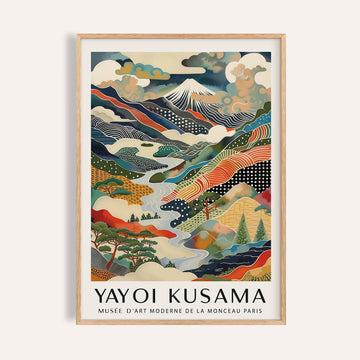
Mountains in Japanese art are tied to strength, endurance, and spiritual depth. Mount Fuji, in particular, is a sacred symbol, often used to represent peace and permanence. Mountains appear frequently in ink wash paintings, either as the main subject or in the background of broader landscapes.
These pieces work beautifully in offices, studies, or spaces where you want to foster reflection and quiet thought. Their solid presence brings visual grounding without heavy detail.
Koi Fish: Perseverance and Personal Growth
Koi fish are often associated with resilience, as they are known for swimming upstream. In Japanese folklore, a koi that successfully climbs a waterfall can become a dragon, a symbol of transformation and reward through effort.
Art featuring koi is fluid and rhythmic, often shown in pairs or groups. Koi prints are ideal for workspaces, home studios, or anywhere you want to encourage progress and quiet confidence.
Bamboo: Flexibility and Strength
Bamboo bends but doesn’t break. In Japanese culture, it symbolizes both humility and inner strength. It’s a common motif in brush painting, often paired with sparrows or seasonal blooms to reflect harmony with the natural world.
Bamboo artwork fits well in almost any room. It pairs particularly well with neutral decor and adds a hint of structure without dominating the space.
How to Choose Symbolic Art for Your Space
Consider what each room in your home represents. A bedroom might benefit from peaceful imagery like cherry blossoms or cranes. A workspace could use the quiet determination of koi or the resilience of bamboo. Choose symbols that align with how you want to feel in the space, not just what looks good visually.
If you’re looking for pieces that carry quiet meaning, explore our Japanese art prints. You’ll find a wide range of designs rooted in traditional meaning, available in modern formats and sizes.
Final Thoughts
Japanese wall art does more than decorate. It tells a story. From the fleeting beauty of cherry blossoms to the strength of mountain peaks, each piece carries meaning that can influence the energy of your home. Choosing art with intention lets you create a space that feels both beautiful and grounded in purpose.