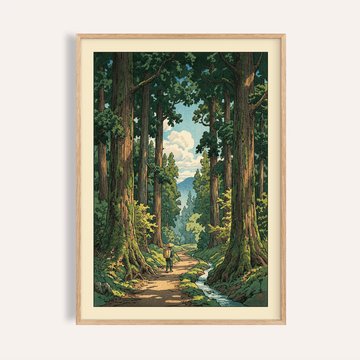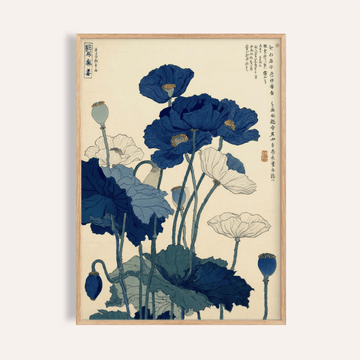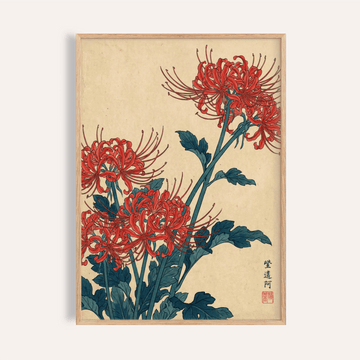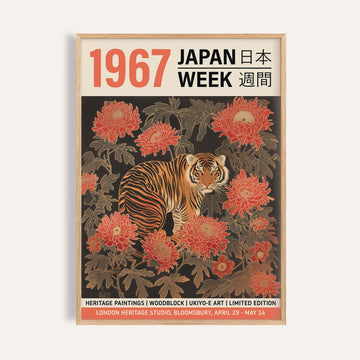
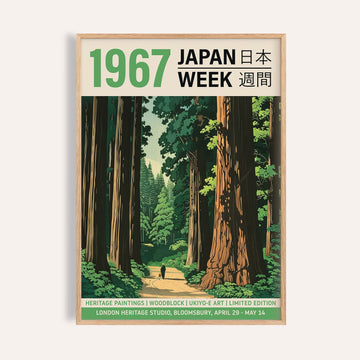
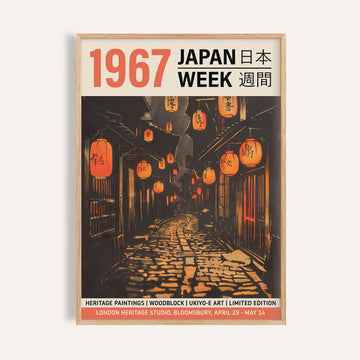

Traditional Japanese print has captivated audiences for centuries with its bold compositions, vibrant colours, and intricate details. Known for their unique techniques and cultural depth, Japanese woodblock prints are still admired today by artists, collectors, and design enthusiasts around the world.
In this guide, we'll explore the history, techniques, and global impact of traditional Japanese print. Whether you're an avid collector or simply drawing inspiration for your own paintings, there's something here for everyone.
Japanese Woodblock Prints: An Ancient Art Still Relevant Today
Japanese woodblock prints, also known as ukiyo e prints, emerged during the Edo period. These prints focused on the "floating world" of entertainment districts, kabuki actors, and landscapes. The process of woodblock printing was a collaboration between several specialists: artists, block cutters, printers, and publishers.
What makes these prints remarkable is the use of multiple blocks carved from cherry wood to apply layers of vibrant colours. This allowed for full color printing, a breakthrough in the late Edo period, which transformed monochrome prints into dynamic, colourful images.
Japanese Prints: A Window into History and Culture
Japanese prints often depict scenes of nature, folk tales, daily life, and kabuki actors. These artworks serve as a historical record of Japan's cultural heritage, offering a glimpse into life during the 19th century and earlier.
The great wave by Katsushika Hokusai is perhaps the most famous example of a traditional Japanese print. Part of his "Thirty-Six Views of Mount Fuji" series, this print captures the power of nature in a bold, dramatic way.
Japanese Art: From Early Ukiyo-e to the Golden Age
The early ukiyo e period started in the second half of the 17th century, with artists focusing mainly on monochrome prints. By the golden age of ukiyo-e in the 19th century, the style evolved into brocade pictures or nishiki e, known for their full color printing techniques.
Artists like Hokusai and Hiroshige pushed the boundaries of ukiyo e woodblock prints, using intricate details to capture landscapes, weather, and the rhythms of daily life. Prints featuring falling snow, stormy seas, and serene portraits brought new life to Japanese art.
Art Prints: Japanese Prints Reach a Global Audience
Today, art prints inspired by Japanese printmaking continue to appeal to a global audience. The influence of ukiyo e can be seen in modern creative prints, graphic novels, and even tattoo art.
Collectors often seek prints from the Meiji period, when independent artists began producing own work outside of the traditional publishing system. This shift encouraged new styles and experimentation, paving the way for moku hanga, the modern version of Japanese woodblock printing.
Japanese Printmaking: A Unique Technique That Stands the Test of Time
The traditional Japanese woodblock method requires patience and precision. Artists sketch the design, which is then transferred to multiple blocks. Each block is carved for a specific colour or part of the design.
The printer applies ink to the block, places the paper face down, and uses registration marks to ensure perfect alignment. This labor-intensive process results in flat areas of colour, seamless gradients, and stunning landscapes or portrait formats.
The Floating World: Themes in Ukiyo-e
The "floating world," or ukiyo e, refers to the pleasure districts of Edo (now Tokyo). These prints often depict kabuki actors, beautiful courtesans, and scenes of leisure. But the theme expanded over time to include folk tales, nature, and travel, reflecting broader aspects of Japan's culture.
Edo Period: The Birth of Ukiyo-e Prints
During the Edo period, from the 17th to the closing decades of the 19th century, ukiyo e prints became mainstream art. Artists used cherry wood for their blocks because of its durability and fine grain, which allowed for intricate details.
19th Century: The Expansion of Japanese Prints
The 19th century marked a period of global exchange. Japanese prints were exported to Europe, influencing artists like Van Gogh and Monet. The art form became a symbol of Japanese art on the world stage.
Full Color Printing: A Game-Changer in Japanese Woodblock Prints
Before the invention of full color printing, early prints used ink in shades of black or grey. By the late Edo period, artists mastered the use of multiple blocks to create vibrant colours and detailed size print formats, elevating Japanese prints to a new level.
Japanese Woodblock: Techniques and Tools
The block cutter plays a vital role in Japanese woodblock printing, carving designs into the cherry wood. Printers then apply ink by hand, using brushes to create intricate details.
Early Ukiyo-e: Simple Beginnings
Early ukiyo e started as simple monochrome prints, often hand-coloured after printing. Over time, advancements in technique and materials led to the rich, colourful works that define the golden age.
Golden Age: The Pinnacle of Japanese Printmaking
The golden age of ukiyo e brought us iconic works like the great wave and thirty six views of Mount Fuji. Artists during this time captured the essence of nature, the floating world, and daily life in Japan.